
Curved CLT: Manufacturing mass timber components for V&A Exhibit
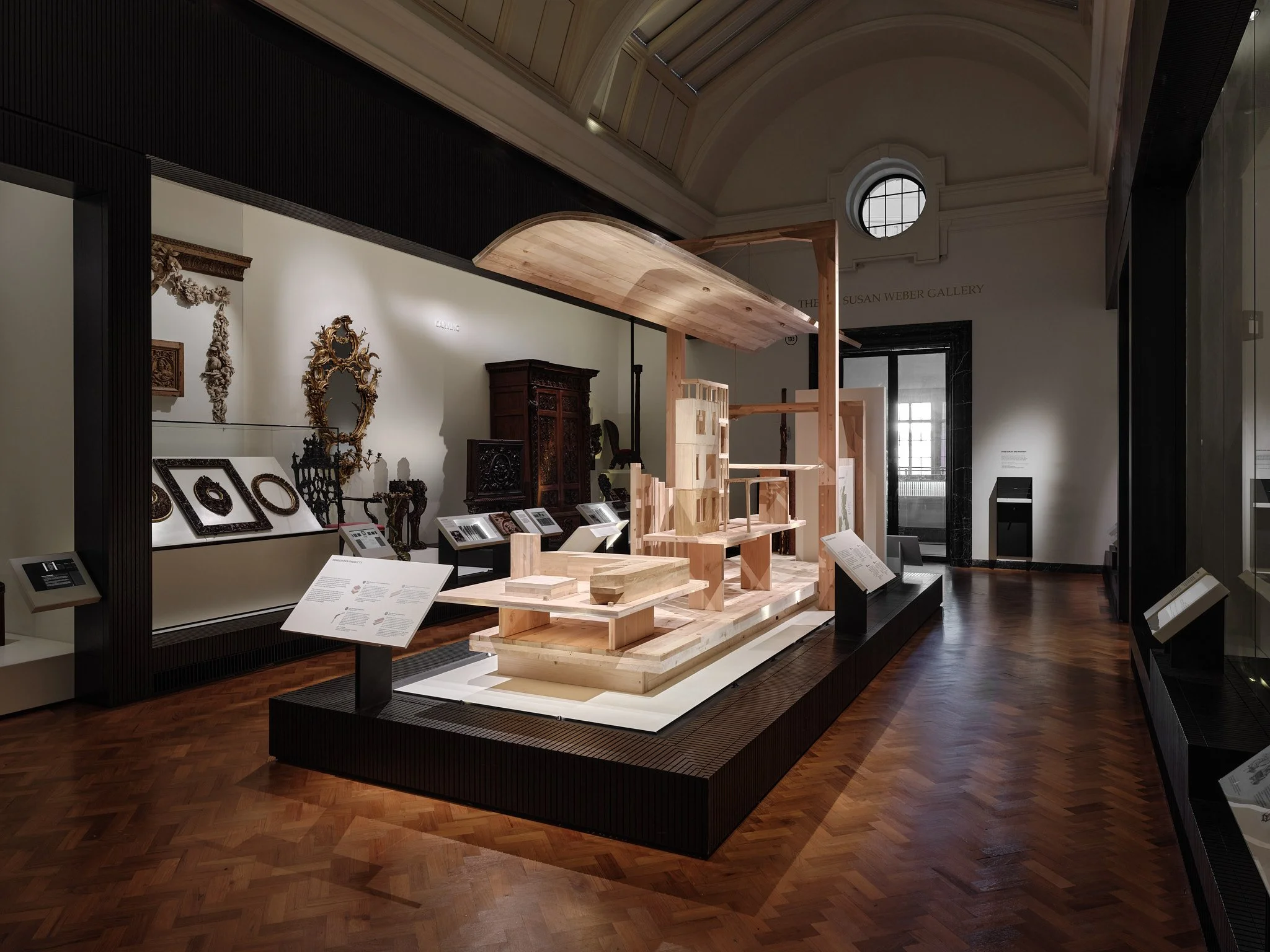
The first example of curved Cross Laminated Timber (CLT) made from English timber demonstrates the benefits of UK-sourced wood to over 3.1m visitors per year.
Led by architecture firm dRMM, Building from Forests showcases the outputs of the three year Forestry Commission-funded project, Building from England’s Woodlands, led by the New Model Institute for Technology and Engineering (NMITE) as part of broader collaboration, including Edinburgh Napier University (ENU), Built Environment – Smarter Transformation (BE-ST), and Ecosystems Technologies.
Building on this research, BE-ST manufactured bespoke mass timber components for the V&A’s Make Good: Rethinking Material Futures exhibition. The V&A exhibition involved the production of an innovative curved cross laminated timber (CLT) ceiling – the first from English wood – combining hardwood and softwood, alongside glued laminated timber portal frame (GLT-P) components, to demonstrate the versatility and aesthetic potential of homegrown timber in a high-profile cultural setting.
The Exhibition
Make Good: Rethinking Material Futures is a V&A curatorial project investigating the use of natural, renewable materials in design and architecture. The initiative invites practitioners from different fields to share research, knowledge and skills while considering the responsibilities of designers and consumers toward the natural world. The project encompasses an annual symposium, an annual display and an ongoing acquisition initiative, capturing the programme's research outputs in the museum collection.
Located in the city centre of London, the exhibition provides a platform to demonstrate the capability of homegrown timber and mass timber products to diverse audiences, with the potential to stimulate further interest and future projects in sustainable construction.
On show until the end of October 2026, the exhibit is now open to visitors at the V&A in South Kensington.
The Challenge
The V&A exhibition required components that would showcase the technical and aesthetic possibilities of UK-grown timber whilst meeting the standards of a major cultural institution.
The project demanded manufacturing expertise capable of producing a curved CLT ceiling, representing only the second known attempt of its kind in Europe. The components needed to demonstrate advanced timber engineering whilst creating an inspiring display that would communicate the potential of natural, renewable materials to a wide audience.
The project brought together a specialist team including Edinburgh Napier University for academic expertise, dRMM Studio for exhibition design, BE-ST for manufacture, Highland Heritage Woodworks and Rothoblaas for components and fixings, Xylotek for logistics and installation, and Evolution Rigging for rigging design, requiring careful coordination across multiple disciplines.
BE-ST's Manufacturing Solution
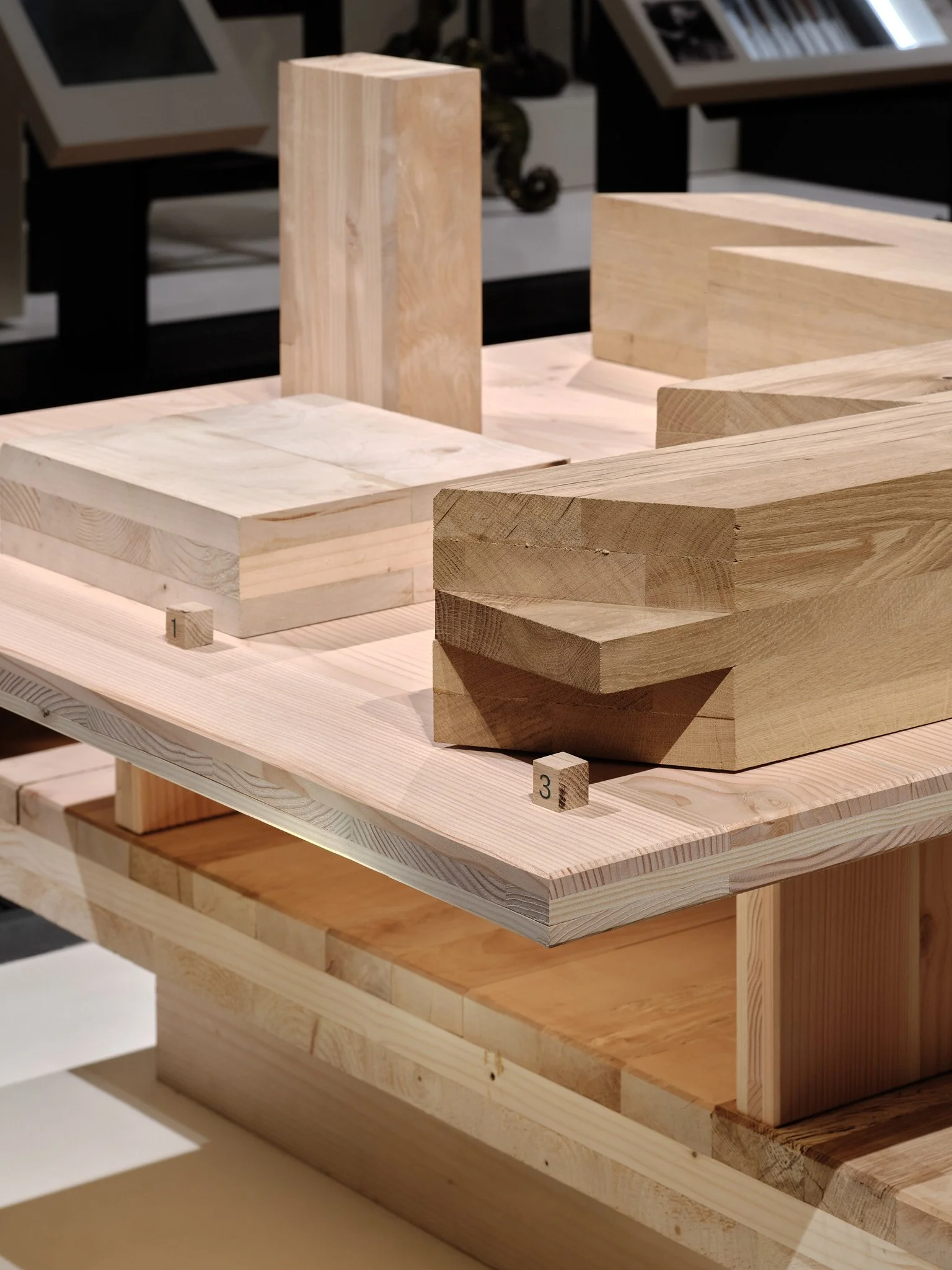
Using the facilities and equipment at the Mass Timber Centre of Excellence, BE-ST manufactured the mass timber components using a combination of hard and softwood to create the innovative curved CLT ceiling. This approach allowed the team to optimise both structural performance and visual appeal, combining different timber species to achieve the desired aesthetic and technical characteristics. The curved form represented a significant manufacturing challenge, requiring precise fabrication techniques to achieve the complex geometry whilst maintaining structural integrity.
Alongside the CLT ceiling, BE-ST, Ecosystems Technologies and Highland Heritage Woodworks manufactured components that formed integral parts of the exhibition structure. The production process demonstrated the project partners capability and BE-ST's technical expertise to work with homegrown timber, supporting the exhibition's core message about the potential of locally sourced, renewable materials in contemporary architecture and design.
Innovation and Impact
Edinburgh Napier University led a programme of extensive testing, which was also one of the first of its kind, to examine a range of English hardwood species. The results have enabled structural properties to be assigned to these hardwoods and then for scalable structural applications to be explored and developed.
The curved CLT ceiling represents a significant technical achievement. The innovative combination of hardwood and softwood within the CLT panels demonstrates advanced manufacturing capabilities here within the UK. This approach allows designers to consider timber not merely as a sustainable alternative but as a material with unique visual and technical qualities.
Project Outcomes
BE-ST and partners successfully manufactured all components for the Make Good exhibition, delivering the innovative curved CLT ceiling and glulam elements that form the centrepiece of the display. The exhibition showcases this innovation alongside other high-value products that can be created from English-grown hardwoods.
The exhibition's location in central London ensures that the components reach a diverse audience, from architects and designers to the general public.
Through this collaboration with dRMM Studio and the wider project team, BE-ST has contributed to an important cultural and educational initiative that challenges practitioners and consumers to reconsider their relationship with natural materials.
Partners:
· BE-ST (Lead manufacturer)
· Ecosystems Technologies (component manufacturer)
· Highland Heritage Woodworks (component manufacturer)
· Rothoblaas (Fixings)
· dRMM Studio (Exhibition design)
· V&A (Client/Cultural institution)
· Xylotek (Logistics and installation)
· Evolution Rigging (Rigging design)
· Edinburgh Napier University (Academic)