
Timber in Construction: The skills programme built for what's coming next
Timber is becoming a core part of how the UK builds. As offsite approaches such as timber frame and mass timber continue to gain market share, those who understand wood, and can work with it confidently, will be better placed for what is coming next.
Hugo Taillandier has spent a decade working in construction, on site and in factories with some of the UK's leading timber specialists. Trained in architectural technology and mechanical engineering, and now leading training programmes at BE-ST, he is one of the key people delivering the upcoming Timber in Construction Skills initiative. Here, he makes the case for why it matters and why now is the time to act.

What is the Timber in Construction programme, and who is it for?
The Timber in Construction Skills Programme is designed to help professionals build competence and confidence to specify, design and build with timber. A two-year initiative backed by CITB, it brings together Donaldson Timber Systems, Edinburgh Napier University, BE-ST, Timber Development UK (TDUK), the Structural Timber Association (STA), and NMITE. The programme is built on a shared mission to close the skills gap in the construction industry when it comes to timber. The training initiative is about looking honestly at two pictures side by side: where the construction industry is today, and where it needs to be to meet the demands ahead.
We’re talking about the need to build 300,000 new homes a year, bringing costs down, creating affordable housing, reducing the cost of living through warm and well insulated homes, constructing buildings that last, cutting snagging and defects for developers, and reducing our carbon footprint in line with current government policy. The list of justifications for this programme is long, and the numbers behind it are sobering.
We are living in an age of information where guidance on how to build a better construction industry is widely available, and most of it is free. The problem isn’t access to knowledge, it’s implementation. That’s exactly what this programme is designed to address.
The programme is for anyone who wants to develop their skills in offsite timber construction, whether you’re a single trade operative, architect, engineer, project manager, or working for a national developer. There is something here for every level.
What’s the problem that made this programme necessary?
The construction industry is facing a perfect storm with rising housing demand, tightening carbon targets, cost pressures, and a workforce that hasn’t always kept pace with the shift towards modern methods of construction, including offsite timber systems.
The gap we’re trying to close isn’t just about knowledge. Most people can find information online. The real gap is between knowing something and being competent at doing it. Without that bridge, the industry risks continuing to build in ways that are slower, more expensive, less sustainable and less reliable than they need to be.
If we don’t address this, we simply won’t be able to meet the targets ahead of us, not on housing numbers, not on affordability, not on carbon. Change is coming whether the industry is ready or not. The question is whether we step into it or get dragged along by it.
You have experience both as someone in construction and as someone who will be delivering this training. How does that shape the way you’ll approach it?
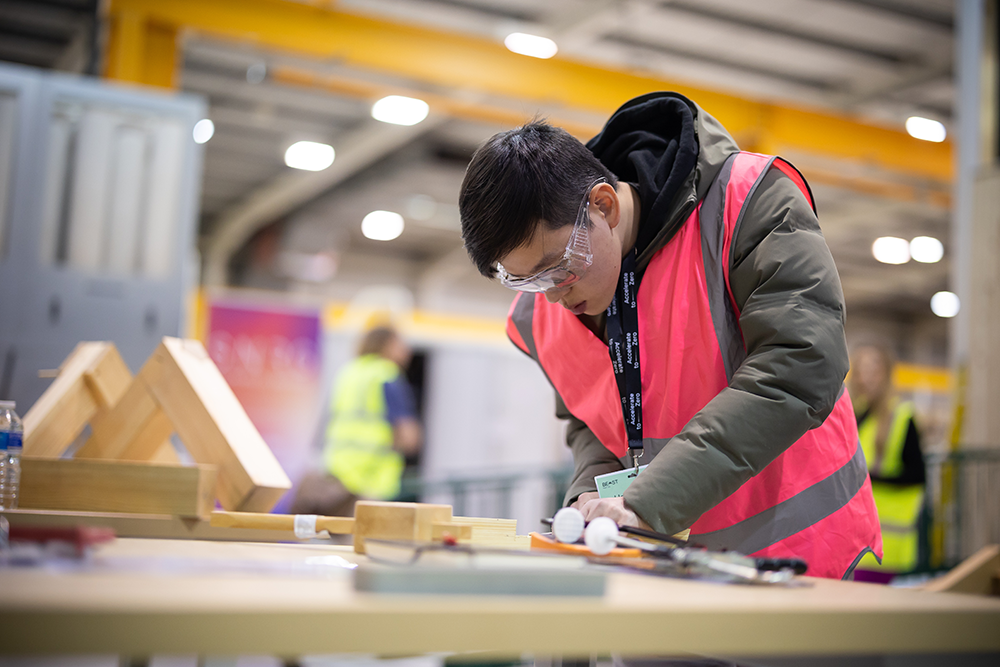
That dual perspective is everything. When you’ve worked in construction, you understand that the best way to become competent at building things is to build things. Not to read about it. Not to watch a presentation. To do it, for real.
The framework we’ve built is straightforward: here is a skill the industry needs, here is how to become competent at it and its variations, and here is why you’re doing it. We bridge the gap between knowledge and application by bringing understanding through practical training. Theory plays a role, but a supporting one. Hands-on practice is the engine.
My experience in construction shapes my priorities as a trainer. I’m not interested in delivering content for the sake of it. I’m interested in learners leaving a session and being able to do something differently the very next day.
What do you think will surprise learners most about the programme?
The volume of hands on activity. In construction training, we often forget that we’re preparing people to build things. When learners come in expecting a classroom-heavy experience and instead find themselves actively doing, problem-solving, and practising, that tends to catch them off guard.
But it’s a good surprise. People leave feeling like they’ve achieved something, not just sat through a course. And that’s the whole point.
Some people may wonder whether the training is relevant to them, particularly those working primarily in traditional trades. What would you say to them?
I’d say the construction industry is changing, and it doesn’t much matter whether you’ve decided to change with it yet. Modern methods of construction, and timber in particular, are increasingly part of the answer to the housing and sustainability challenges we face. That’s not going away.
This programme isn’t designed to replace what you already know. It’s designed to build on it. We were very deliberate about not creating something that was too advanced or too abstract for practitioners to connect with. We wanted to create a pathway that anyone with minimal existing knowledge of offsite timber construction could walk into and progress from, and leave with skills they could use immediately. Whether you’re a sole trader or part of a large development firm, there is a next step here for you. The question isn’t really whether this is relevant. The question is whether you want to be part of shaping what comes next, or waiting to react to it.
What does success look like for the programme?
Success looks like this programme embedded in college curricula across the UK, integrated into apprenticeship frameworks, and adopted by construction companies as part of their in-house workforce development. Success would also be to be asked to develop more courses in the future and see other training providers using them across the country.
For individual operatives, success is leaving training as a genuine vector of change in their workplace, applying new skills straight away, not waiting a decade for the industry to catch up. For employers, it’s a more capable, confident workforce that can respond to the demands of modern construction with less waste, fewer defects and faster delivery.
And for the industry as a whole, it’s being able to say we didn’t just talk about the need for change, but we built the infrastructure to deliver it.