
A National Housing Catalogue for Scotland: an idea whose time has come?
Scotland’s housing emergency is often discussed in terms of ambition or funding. Yet as efforts to increase supply gather pace, the real challenge is often delivery: planning and regulation, cost certainty and a fragmented system where projects rarely build on one another.
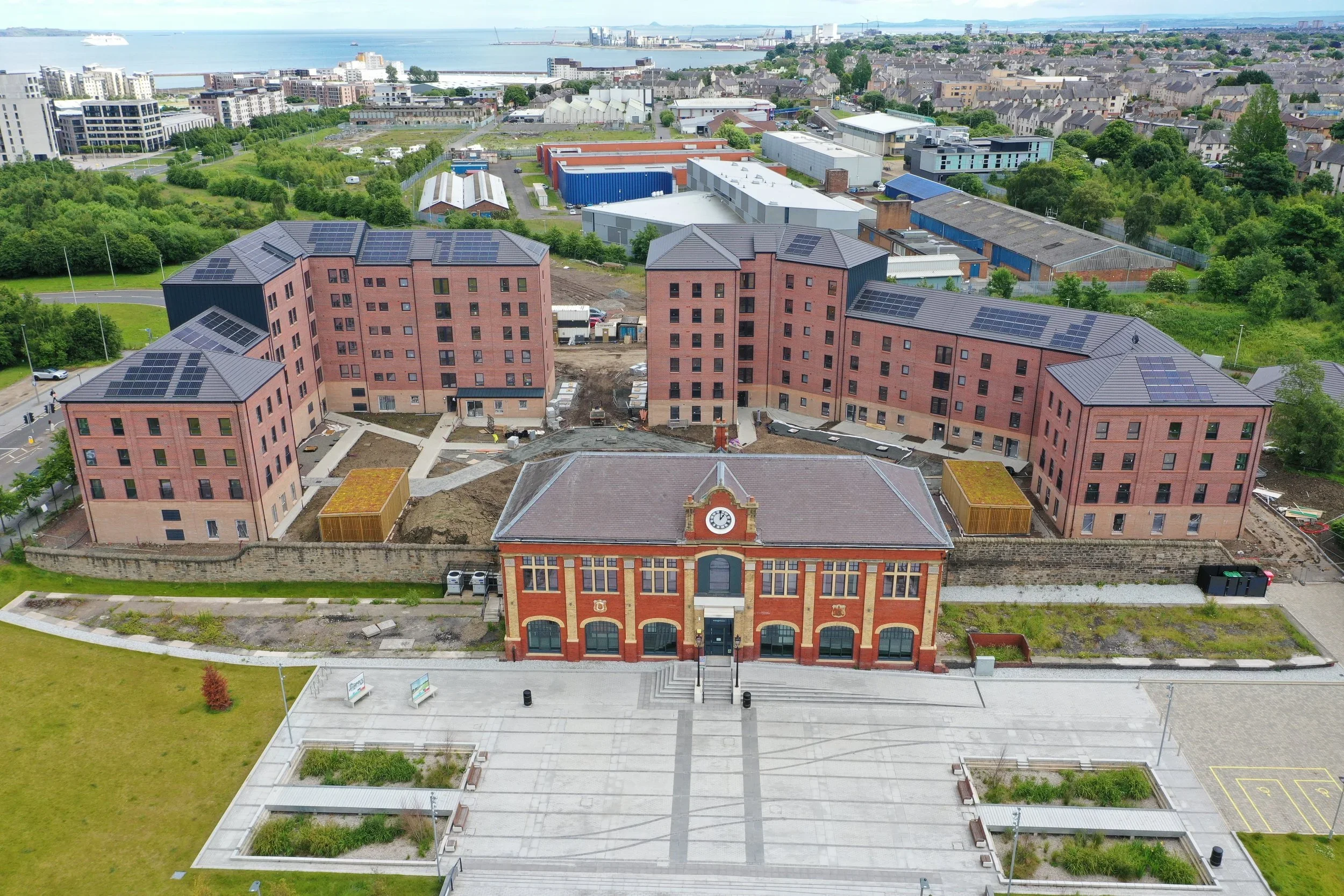
Other countries are beginning to tackle these barriers through national housing catalogues – curated collections of proven housing designs and systems that make it faster, easier and more affordable to deliver homes at scale.
Wales, a country in many ways comparable to Scotland, is already putting this idea into practice. Could Scotland follow suit?
A Scottish National Housing Catalogue (NHC) would be an open source, free-to-use platform of standardised housing designs that any local authority, housing association, community developer or house builder could use. Instead of each project commissioning new designs, organisations could draw on pre-approved typologies that already meet safety, accessibility and performance standards.
That doesn’t mean uniform housing. Designs can still be adapted to different contexts while retaining standardised building systems and performance levels. The aim is to reduce duplication, improve cost certainty and speed up delivery.
We don’t need to start from scratch. This approach is not new to Scotland. The Edinburgh Homes Demonstrator programme developed a series of standardised offsite manufactured housing typologies tested across multiple councils, covering more than 300 homes. The homes were designed to meet net-zero-ready, Gold-level performance, delivering potential heating demand reductions of 35–50%. When the designs are applied at regional scale, capital savings of 2–12% are also projected.
In Wales, the Tai ar y Cyd programme brought together 23 social landlords to develop a national pattern book of housing designs. It includes 15 core house types and 18 variants, designed for offsite timber construction.
Canada has taken a similar approach through the Canada Housing Design Catalogue, a national platform offering more than 50 housing designs aligned with regional codes and construction systems. The catalogue is free to use and intended to reduce design costs and speed up approvals.

If Scotland were to develop a National Housing Catalogue, it would be building on existing strengths. Alongside the Edinburgh Home Demonstrator there are already Scottish examples of what’s possible when design standardisation and modern methods of construction come together. The Athletes’ Village delivered 700 homes in just 700 days using an offsite-led timber approach across twelve house types, finishing seven months ahead of schedule.
We already have a strong offsite manufacturing sector, a well-established timber and forestry industry, and significant expertise in low-carbon housing design. All of which a National Housing Catalogue would build on. The challenge is not capability, but coordination.
BE-ST has been advising internationally on housing catalogues and similar policy approaches, including in Wales and on the Edinburgh Home Demonstrator. We are also involved in conversations already taking place across the Scottish housing sector about how a comparable model could work here.
A National Housing Catalogue would not solve Scotland’s housing shortage on its own. But it could remove one of the persistent bottlenecks in the system, giving councils and housing providers access to tested designs while helping manufacturers plan production with greater certainty.
The housing emergency is often discussed in terms of targets and policy commitments. But delivery ultimately comes down to practical systems that make it easier to build homes quickly and consistently. Other countries have recognised that standardisation, when done well, can accelerate delivery without lowering standards. Scotland can do the same.