
VASO Global opens new factory for recycled glass panel production
Vaso Global designs, develops, and manufactures structural composite panels from recycled glass, creating build systems for low-carbon, modular homes and buildings that create more opportunities in the built environment.
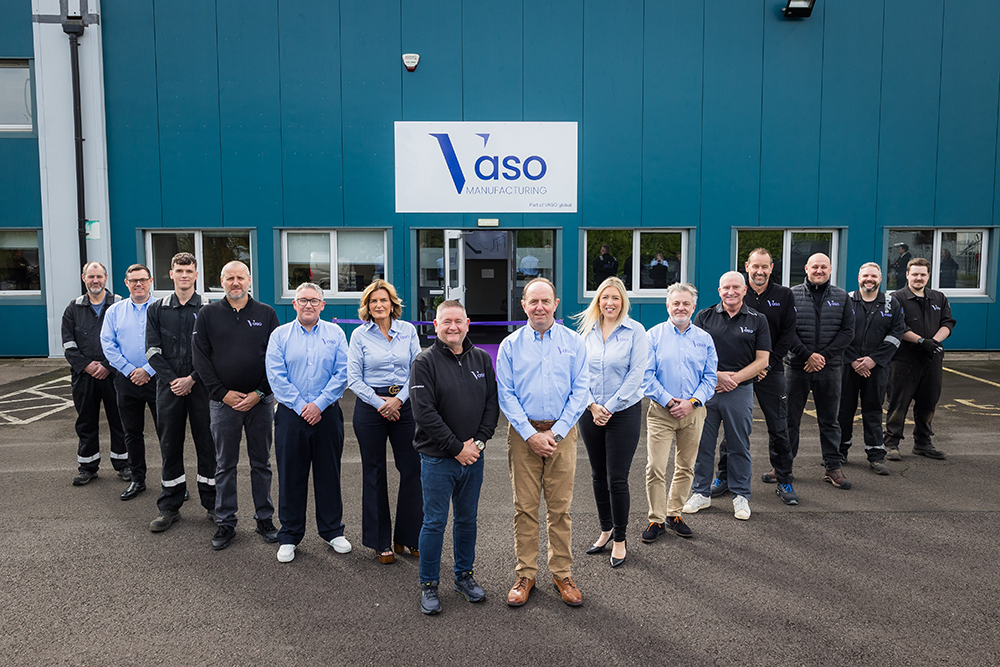
And just recently, in September 2026, Vaso opened a manufacturing facility in Dumfries, where they will start their production line of the new panels. Vaso is set to create 70 jobs within the next five years, with 15 new people already employed.
Recognised as a promising solution to the Scottish housing crisis declared in 2024, the new Dumfries factory will precision manufacture the panels needed to build a four-bedroom house in just 600 minutes. These are flat-packed, delivered to site and assembled in a matter of days.
We had the privilege of speaking with Gary Robertson, Client Relationship and Strategy Director; to explore how Built Environment, Smarter Transformation (BE-ST) has been a catalyst in this early-stage start-up journey.
Since partnering with BE-ST in 2022, Vaso has leveraged strategic advice from the team at BE-ST to navigate the complexities of the construction sector, creating vital connections with universities, colleges, and academia. These connections include Professor Sean Smith at Edinburgh University, the Centre for Net Zero of High-Density Buildings (CeNZ‑HighDB), the Scottish Building Standards Hub, South Lanarkshire College and Dumfries and Galloway College. These collaborations have provided invaluable insights and paved the way for innovative developments, such as Vaso’s heat pump base panel which is currently undergoing testing at the BE-ST Innovation Factory.
Participating with BE-ST at BE-ST Fest as part of the Circular and Sustainable Materials Accelerator in 2023 was a pivotal moment for Vaso, offering a platform to showcase their pioneering approach and gain confidence through the focus on circular components.
Three years on, Vaso continue to exhibit their work at BE-ST Fest, creating more connections and project developments. In 2026, Vaso were in a strong position to become one of our headline sponsors for BE-ST Fest 2026.
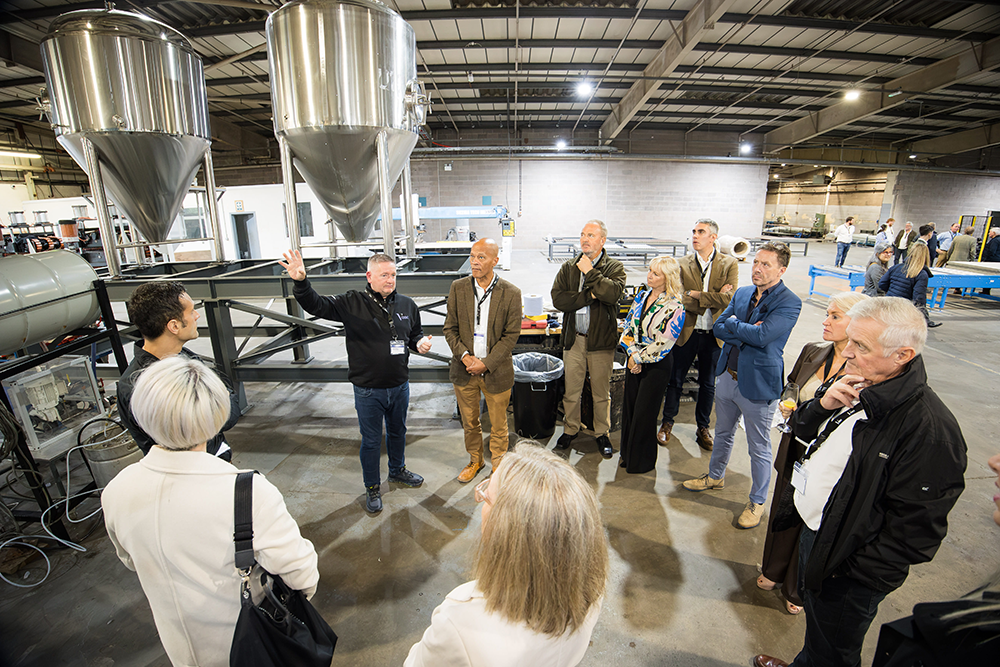
Gary reflected, “That gave us a bit of a confidence boost because everybody else was looking at circular components. And we are a component manufacturer; we can create a whole build system from our components. And for us, that one was exciting to be included on that accelerator.”
With funding from South of Scotland Enterprise (SOSE) and project management and innovation support from BE-ST, the innovation is now ready for full commercial rollout with the opening of the new factory.
Investment from PXN Ventures, Scottish Enterprise, and UKRI’s matched funding shows the growing recognition of Vaso’s potential to revolutionise the built environment.
Gary emphasises the importance of opening minds and perspectives: “Many people are looking at siloed methods about delivery and how we do things. We've managed to open the scope and get people to look at the world through different optics, as one of the solutions that's going to be required to help the built environment. We see ourselves as one of the solutions, because every solution is going to be needed, not just a vessel solution.”
Looking ahead, Vaso is looking to create an accreditation programme to enable companies and the workforce to become Vaso installers. The ambition is to create a community of skilled workers who can build with the VASO system, enhancing the skills base within the built environment and encouraging new entrants through innovation.
To end our chat, Gary mentioned, “Whatever you feel your innovation idea may be, reach out to BE-ST because the great thing about BE-ST is that they listen and they consider. And they can share vital insight that can help shape how you want to move forward. That's the superpower; they can make those connections.”