
Benefits of UK Cross Laminated Timber (CLT) for Construction
Faster and better construction projects with UK CLT.
Mass timber construction, particularly Cross Laminated Timber (CLT) and Glued Laminated Timber (Glulam), offers an enhanced alternative to traditional materials and methods, in particular when the timber is sourced from sustainably managed UK forests.
For construction teams and clients focused on optimised project delivery, cost incentives, and improved building performance, homegrown CLT presents advantages that extend well beyond carbon reduction. Research now validates both the performance of UK-grown timber and its potential to improve our built environment.
Download the Mass Timber Centre of Excellence Virtual Tour to explore the benefits of mass timber products like cross laminated timber (CLT), sourced sustainably in the UK, walking through our factory environment.
Addressing real project challenges for construction teams and clients
Project teams today face mounting pressures that compound with every delay or cost overrun. Low margins and tight budgets are stretched further by increasing material costs, whilst supply chain disruptions routinely impact project timelines.
Add regulatory barriers to adopting sustainable construction methods, and the challenge becomes clear: how do you deliver on time, on budget, and on environmental targets simultaneously?
UK homegrown CLT helps address these challenges. The offsite manufacturing approach reduces on-site time, cutting preliminary costs and weather-related delays. Domestic sourcing eliminates import unpredictability and reduces global price fluctuation risks. CLT's proven sustainability credentials also support environmental goals, delivering carbon reductions when used in place of more energy intensive products.
The case for construction made in the UK
The UK currently holds an uncomfortable position as the second largest net importer of forest products globally. This dependency leaves supply chains exposed to external shocks, geopolitical risk, and unnecessary transport emissions. There's a better approach within reach.
UK-grown softwood timber, including species from both Scotland and England, have been proven suitable for mass timber systems. Research conclusively demonstrates that homegrown timber can be engineered to meet Eurocode 5 structural requirements when suitably processed. In collaboration with research and industry partners, we published a series of reports under ‘Transforming Timber’. These reports offer in-depth insights into the various aspect of homegrown mass timber research, validating it as a viable alternative to traditional construction materials.
Facilities such as the Mass Timber Centre of Excellence in Scotland are now translating this research into practice, creating domestic manufacturing capability where we've historically relied on imports.
Accelerating project delivery
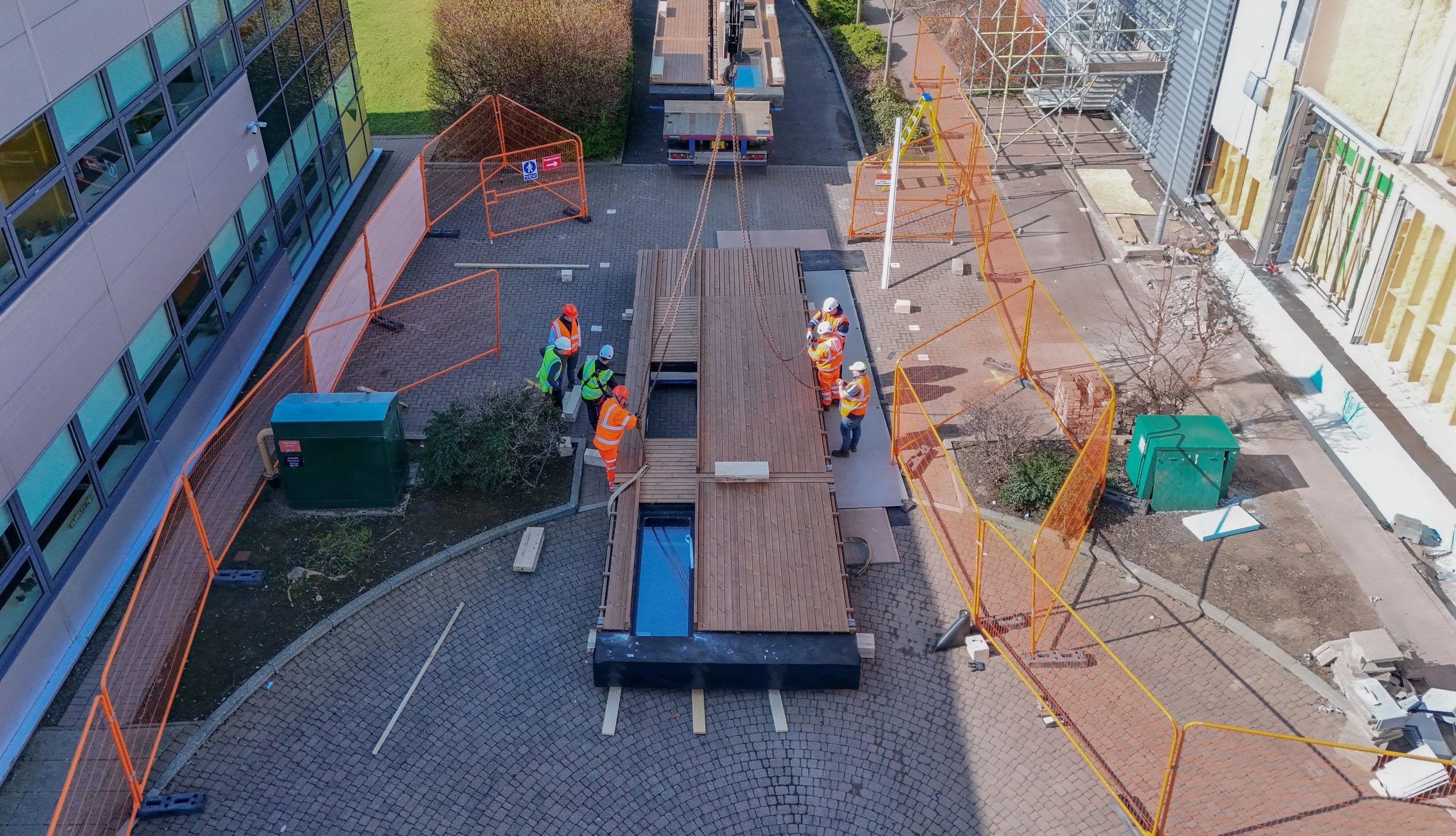
CLT delivers measurable time savings through its integration with modern methods of construction (MMC) and offsite manufacturing (OSM). The efficiency gains come from Design for Manufacture and Assembly (DfMA), where structural components are precision-engineered offsite under controlled conditions before arriving on site ready for rapid assembly.
The time savings are substantial. Looking at the retrofit of Scotland’s National Retrofit Centre, project Manager Gavin Johnston attributes manufacturing offsite with mass timber as the reason that allowed us to complete this complex programme within such an ambitious timeframe.
In wider industry, one housing project using an imported volumetric timber system achieved a 50% reduction in build time compared to traditional construction methods, with 90% of the build completed in the factory, minimising on-site work. This approach aligns directly with the UK's Construction 2025 Industrial Strategy objectives: lower costs, faster delivery, and reduced emissions.
When Building Information Modelling (BIM) is integrated with manufacturing processes, the benefits multiply. Automated production of accurate bills of quantities and construction drawings reduces errors and accelerates overall project delivery.
Proven structural performance
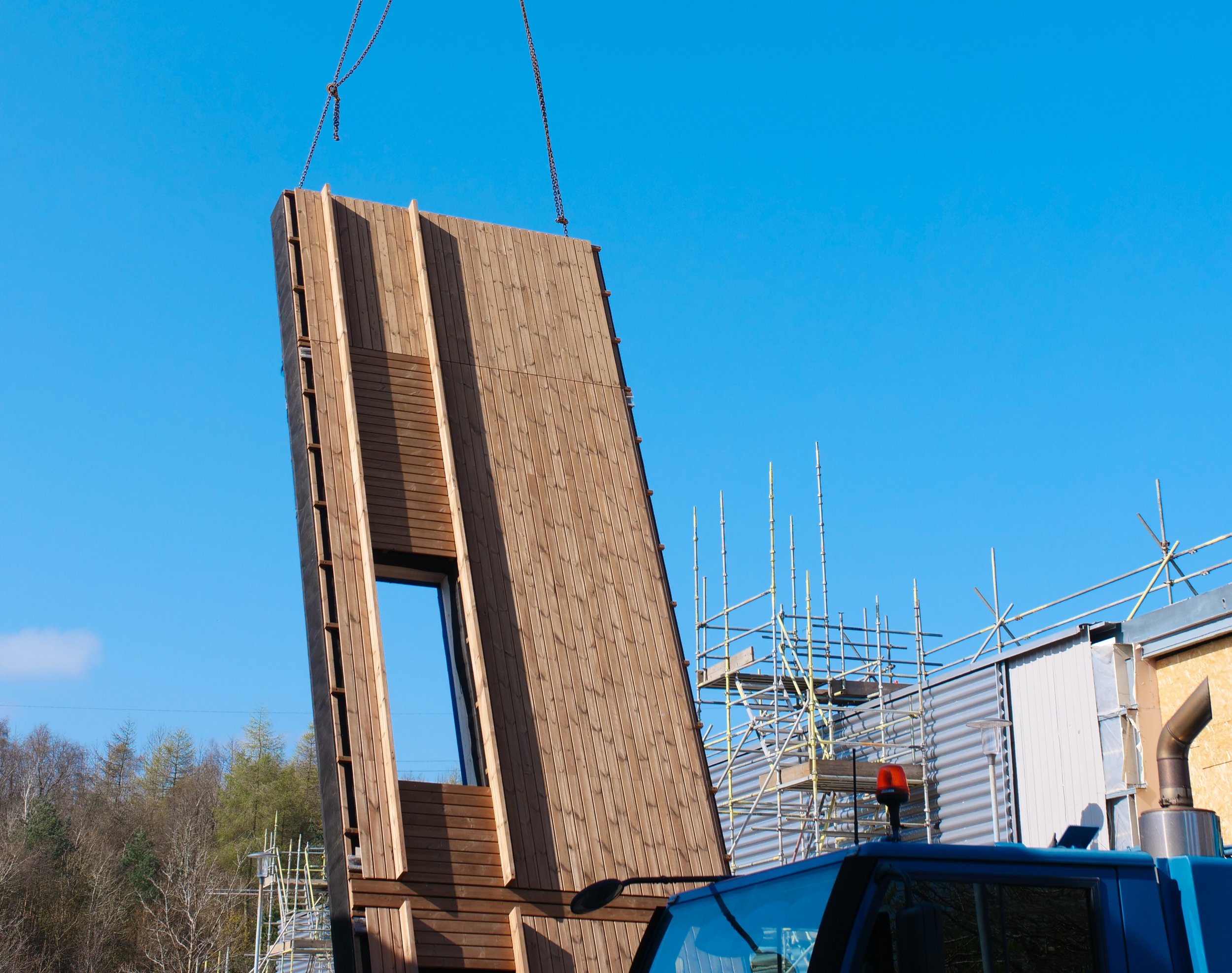
Mass timber structures demonstrate excellent strength-to-weight ratios and have proven resilience in load-bearing capacity.
Testing during Transforming Timber on UK homegrown CLT, Glulam, and Nail-Laminated Timber (NLT) has shown that the strength and stiffness of these systems consistently exceed estimates based on the baseline material (C16 spruce). The manufacturing processes adopted for homegrown mass timber produce strong, durable, and compliant panels appropriate for construction use.
Mass timber structures can be 20-30% lighter than traditional systems. This weight reduction translates directly into less substantial foundation requirements, cutting both material costs and embodied carbon before construction reaches ground level. Many projects now employ hybrid systems, combining CLT or Glulam with steel to maximise performance whilst maintaining design flexibility.
Carbon storage in practice
The built environment accounts for approximately 40% of global greenhouse gas emissions, with steel and cement being major contributors. Mass timber presents an exciting alternative.
Timber sequesters atmospheric CO₂ as it grows. When converted into CLT or Glulam, this biogenic carbon remains locked within the building's fabric throughout its lifespan, effectively converting the structure into a long-term carbon store. The numbers are striking: volumetric mass timber units achieve a net carbon sink of –142 kgCO₂/m², whilst traditional brick and block construction contributes +612 kgCO₂/m² to the atmosphere – a difference of 754 kgCO₂/m².
Many CLT projects in the UK, even those designed before current stringent environmental targets existed, outperform the embodied carbon benchmarks set for 2030.
Enhanced occupant experience
Projects succeed when end users value them. Occupants in surveyed UK mass timber buildings consistently report feeling more relaxed and comfortable. The aesthetics of exposed timber elements connects people with nature, linking to enhanced health and psychological wellbeing.
In multiple case studies, the majority of users felt the materials reminded them of the natural world. When people genuinely appreciate their environment, buildings receive better long-term care, extending asset lifespan and the duration of carbon storage.
Mass Timber Centre of Excellence
Leveraging the Centre's unparalleled equipment and expertise, BE-ST provides support for the industry to integrate timber into projects. With access to the UK’s largest mass timber manufacturing facility, organisations can design and build quicker, to higher quality, and more effectively using this sustainable material.
At the Mass Timber Centre of Excellence, our precision manufacturing, quality control, and innovative processes deliver projects that finish on time, on budget, and without compromise.
Explore our Virtual Tour to learn how building with mass timber products like cross laminated timber (CLT), sourced sustainably in the UK, can help your organisation or construction project.