
Building an inclusive net zero workforce for high-density living
In Scotland, we have 2.74 million dwellings, 23,000 buildings in public ownership, 230,000 non-domestic buildings and 83% of Scotland’s population live in urban areas. Determining how to decarbonise high-density areas within our cities and towns poses one of the greatest challenges in meeting net zero targets in Scotland.
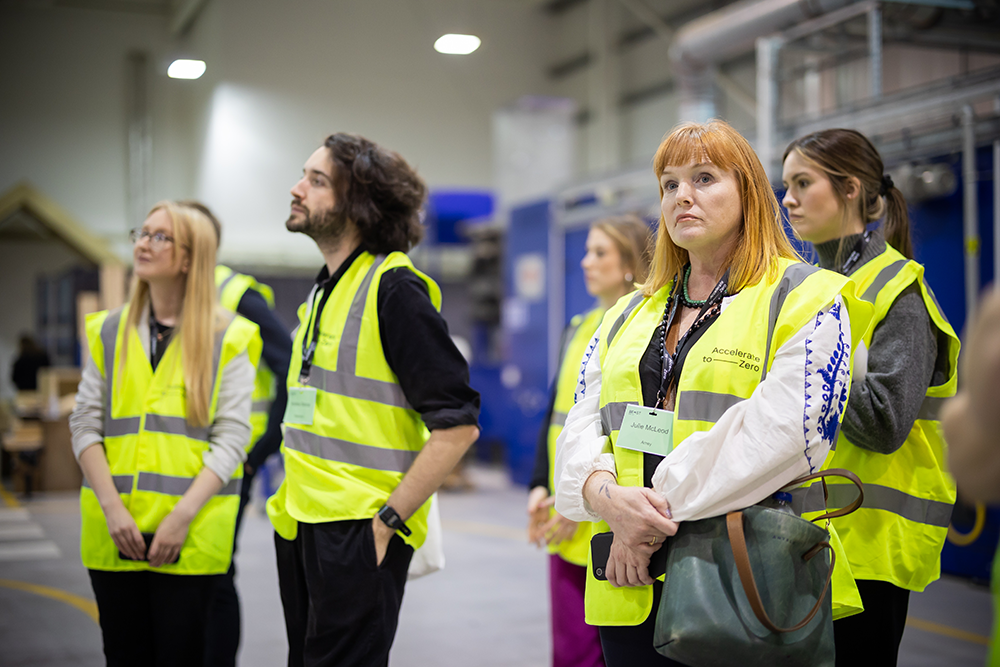
The Centre for Net Zero High-Density Buildings (CeNZ-HighDB) is funded by UKRI as part of the UK’s Green Economy Centre. Led by the University of Edinburgh, behind the Centre sits a research partnership between the Universities of Glasgow, Strathclyde, West of Scotland, Edinburgh Napier University, and BE-ST.
To unlock a ‘green’ economy, we need to find ways to decarbonise diverse and complex building archetypes at scale and to overcome multi-use, historic and ‘listed status’ planning constraints. CeNZ-HighDB aims to explore and deliver a range of innovative low carbon solutions to both these challenges in urban, high-density buildings across Scotland’s towns and cities.
The Centre aims to deliver solutions which will enable lower energy bills for citizens, substantial carbon emission reductions, and accelerate inclusive retrofit delivery for social housing sectors and urban buildings. Underpinning this is the need to address the skills gap and create a more diverse workforce.
EDI, Skills and Training Working Group
TWG VI unites organisations from academia, industry, government, and training sectors to develop a skilled, inclusive workforce for Scotland’s net zero transition. The board comprises 17 members offering their expertise in industry needs, policy, and delivery – contributing and creating practical, scalable skills solutions for a greener, future-ready economy.
The group’s work is grounded in three central principles:
Equality – Ensuring that opportunities in the net zero transition are accessible to everyone, regardless of gender, ethnicity, ability, or socio-economic background.
Diversity – Actively encouraging participation from underrepresented groups in construction, engineering, and related STEM fields, enriching the talent pool with varied perspectives.
Inclusion – Designing training pathways and workplace practices that break down structural and practical barriers to involvement.
Flagship projects and programmes
So far, the working group is focused on delivering impact across six programmes and projects:
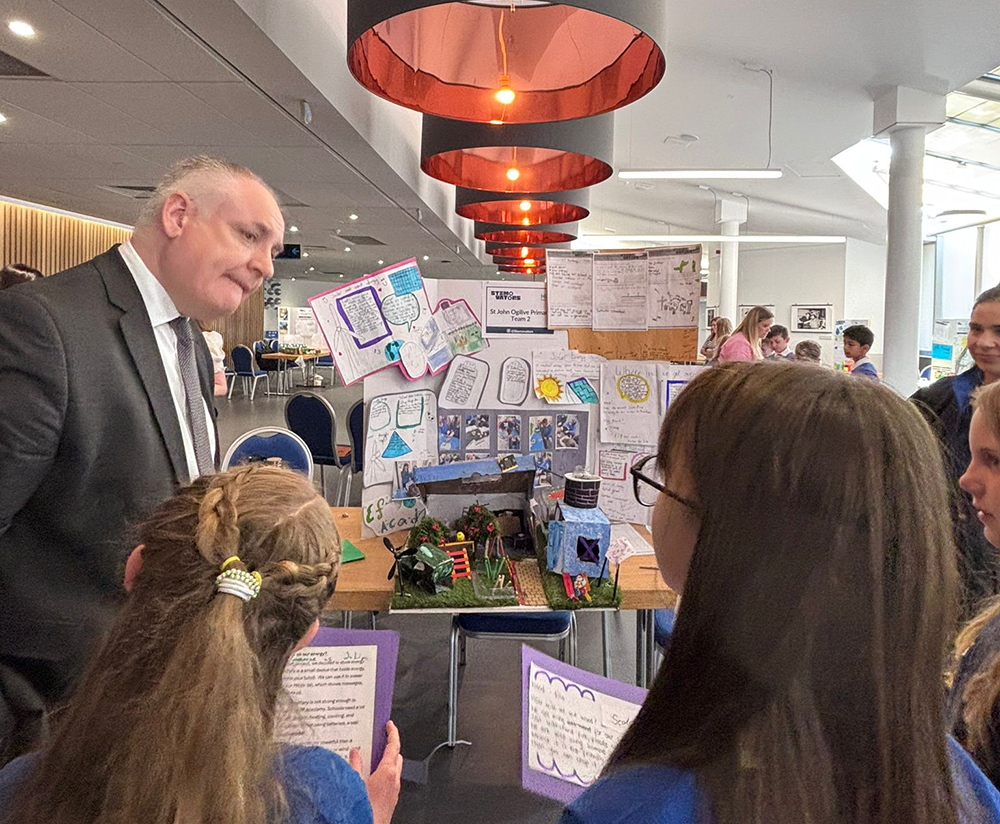
1. CeNZ-HighDB Powering Futures – School Challenge Programme 2025/26
A collaboration with the HCI Skills Gateway, Vital Energi, and Powering Futures, this 30-week SCQF Level 6 qualification introduces school learners to sustainability challenges in the built environment.
The programme acts as a live testbed for gathering evidence on learner engagement, developing skills, and increasing engagement with underrepresented communities and industry. Students not only gain exposure to STEM and construction careers but help shape solutions to real-world net zero challenges.
2. HCI Legacy – Informing an Inclusive Skills Framework
Building on the success of the Housing Construction & Infrastructure (HCI) Skills Gateway in the Edinburgh and South East Scotland City Region Deal, this project creates a future-ready skills framework for net zero construction across Scotland and the rest of the UK. The ‘Knowledge Hub’ model coordinates training resources, connects stakeholders, and embeds EDI in sector-wide skills interventions.
3. Edinburgh Homes Demonstrator (EHD) EDI case study
This research explores how net zero housing delivered through MMC approaches can be adapted for different socio-economic contexts, and the EDI-related barriers to its adoption. Activities include gap analysis, needs and barriers assessments, workshops for students and policymakers, reflective capture roundtables to explore rural versus urban challenges and international knowledge exchange with institutions such as UC Berkeley’s Terner Center for Housing Innovation.
4. Transforming Timber - Retrofit
This project captures up to date information on the housing retrofit market with an emphasis on the urban context. It demonstrates the impact of utilising advanced homegrown timber technologies and renewable options in retrofit, taking account of embodied energy and carbon as well as operational performance, an extended case study analysis, and a prospective CPD workshop.
5.Stemovators - ‘Construct a Crane’
This project will deliver an inclusive, curriculum-linked STEM challenge to schools across the Edinburgh and Southeast Scotland City Region. Drawing on real-world engineering in high-density regeneration and retrofit, the “Construct a Crane” challenge allows pupils to explore the logistical solutions required for net zero construction.
The project will reach up to 25 schools, 600 pupils (P6-S2), and a further 1,000–2,000 pupils nationally through Scottish Government targeted funding for areas of high deprivation to ensure equal access and increased participation in STEM. Celebration event.
6. Next-Gen Summit in partnership with North Lanarkshire and BE-ST
Next Gen is a programme designed to allow young people from across Scotland to get hands-on with and inspired by the potential of low carbon and sustainable construction. Next Gen is centred on practical, experiential learning, covering knowledge and training in retrofit, Passivhaus digital construction and modern methods of construction.
Delivered over a full-day experience, young people take on roles within a simulated built environment team to collaboratively design an inclusive and sustainable ‘eco classroom’.
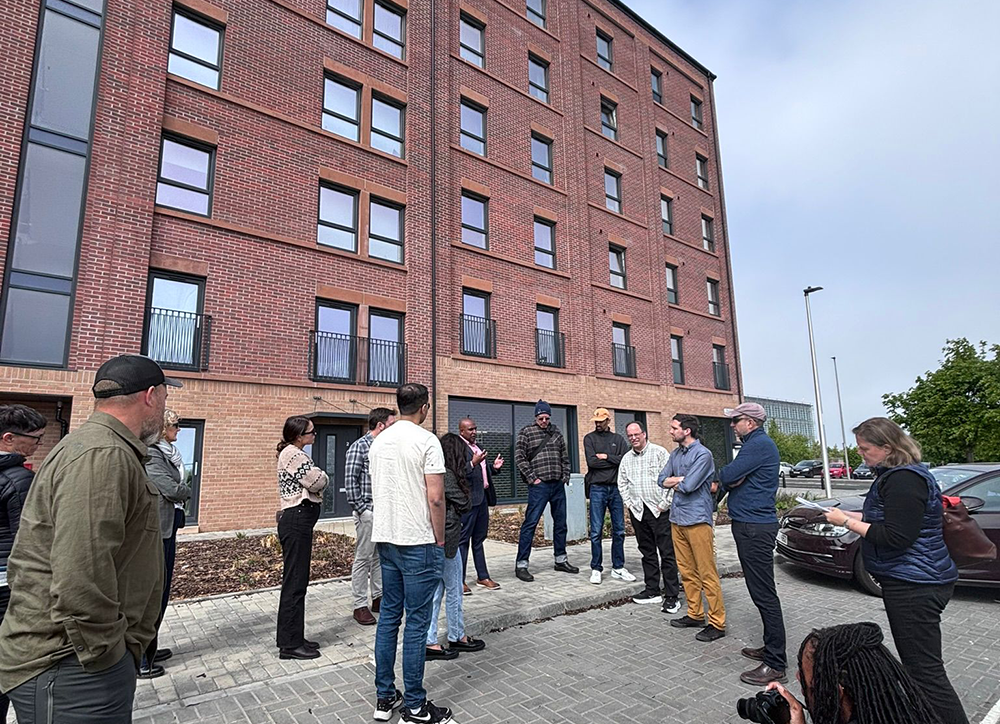
What success looks like for the TWG VI
The TWG VI is measuring success against both quantitative and qualitative outcomes, including:
Establishing a future-ready inclusive framework, consolidating what works and drawing upon lessoned learned regionally, nationally and internationally.
Enabling a net zero construction workforce with an increased representation of women, minority ethnic groups, people with disabilities, and those from disadvantaged backgrounds.
Improving the training pipeline from school to industry, with strong pathways for career changers and reskilling to stimulate a diverse workforce equipped to deliver net zero high-density retrofit and new build at scale.
Find out more about CeNZ-HighDB and TWG VI at www.cenz-highdb.ac.uk.