
Fire-safe mass timber in the UK – A report by BE-ST and University of Edinburgh
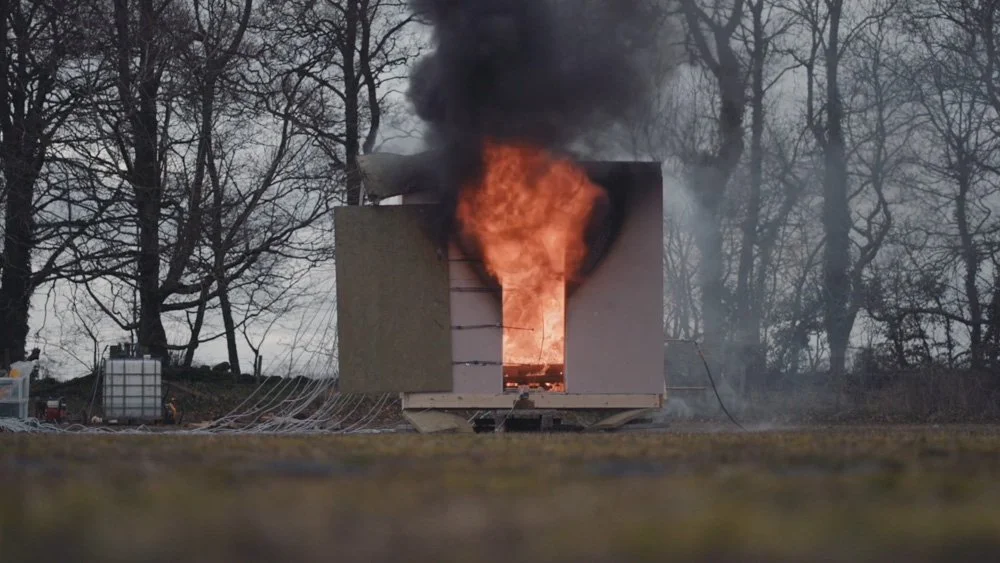
A new research project led by BE-ST and the University of Edinburgh has provided one of the clearest pictures yet of how stakeholders view fire safety in mass timber buildings and what needs to happen next to unlock wider adoption.
Funded by Built by Nature, the project was launched in response to the UK Government’s 2023 Timber in Construction Roadmap, which called for greater understanding of how timber can be safely used in modern construction.
The research brought together industry, academia, insurers, government representatives and fire specialists to examine the current rate of adoption of mass timber in the UK, with a particular focus on fire performance, regulation and stakeholder confidence.
The resulting report reveals a nuanced picture where there is broad recognition of timber’s environmental benefits and growing technical confidence among specialists, but significant barriers to mainstream adoption remain.
Client confidence remains the defining factor
One of the report’s strongest conclusions is that client motivation and “buy-in” are the single most important influences on whether a building is ultimately delivered using mass timber.
Across the industry there is growing technical confidence in engineered timber systems such as cross-laminated timber (CLT) and glulam. However, many projects still fail to progress because clients perceive mass timber as carrying additional risk, particularly in relation to fire safety, insurance and regulatory scrutiny.
The findings suggest that reducing perceived risk may be the most important next step for the sector. The report highlights that many engineers and technical specialists working directly with mass timber already believe the core fire engineering challenges have been adequately addressed. Instead, they argue that successful projects depend on involving suitably experienced professionals and ensuring robust design, detailing, and verification processes from the outset.
A lack of publicly available data
Despite this technical confidence, the research identified a shortage of publicly available fire testing data relating to mass timber construction details and systems as a major obstacle, particularly about how specific timber assemblies perform in fire resistance tests and real-world fire scenarios. This often results in project delays, increased costs and uncertainty during approvals and insurance negotiations.
Currently, much of the industry relies on proprietary testing and specialist consultancy expertise to verify designs. While stakeholders acknowledged the value of this expertise, many also expressed concern that the wider industry has become overly dependent on a limited pool of specialists and privately held information.
To address this, the report recommends creating a large, publicly accessible database of independent fire testing data covering a wide range of timber products, systems, and construction details. Stakeholders argued that such a resource would improve transparency, accelerate design processes, and help create a more level playing field across the industry.
Importantly, participants stressed that any future dataset must be perceived as impartial and independent from commercial interests if it is to gain widespread trust.
The challenge of guidance and regulation
The report also explored how industry stakeholders use existing guidance relating to fire safety in mass timber construction.
Among the most frequently referenced documents were the Structural Timber Association’s Volume 6 guidance and the Mass Timber Insurance Playbook. These were generally regarded as useful and influential resources, particularly for practitioners navigating complex projects.
However, participants also noted important limitations. Unlike statutory guidance such as Approved Document B in England, these industry documents do not carry formal regulatory authority. As a result, they can support decision-making but cannot fully resolve uncertainty among approval bodies, insurers or clients.
The research reinforces the complexity of the UK’s regulatory environment. Strategic government policy papers, such as the “Timber in Construction Roadmap 2025”, increasingly support timber construction because of its potential contribution to net zero targets, embodied carbon reduction and green economic growth. At the same time, building regulations remain officially material agnostic, meaning responsibility for demonstrating safety rests with those designing and delivering the building.
Building industry-wide consensus
One of the report’s most significant recommendations is the need to develop a small number of fully tested, prescriptive timber building designs capable of achieving broad industry consensus around fire safety adequacy.
The idea is that full-scale testing of agreed benchmark designs could provide a shared evidence base to support future regulatory guidance and reduce uncertainty for project teams, clients and insurers.
Stakeholders across almost every group consulted also argued that the UK needs significantly greater investment in mass timber education, both on-site and off-site, to develop a stronger pipeline of qualified professionals. This includes designers, contractors, regulators, installers and fire engineers. However, there was less agreement on exactly what this training should look like or how it should be delivered.
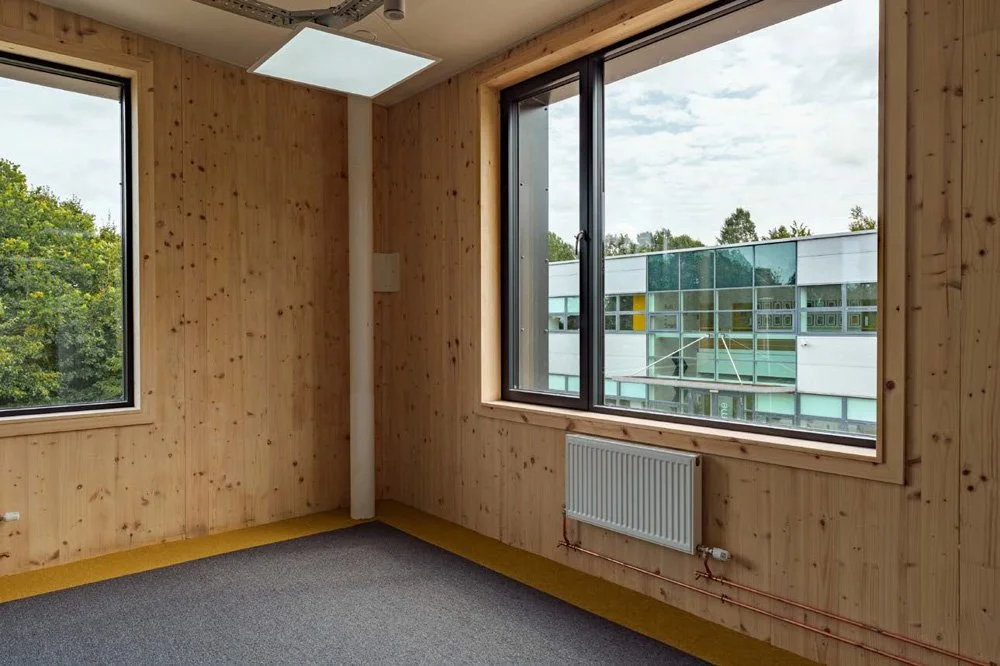
Moving from uncertainty to evidence
Ultimately, the report suggests that the UK mass timber sector is entering a new phase. Technical understanding has advanced significantly over recent years, but widespread adoption now depends on building confidence across a much broader group of stakeholders.
The findings point towards a future where collaboration, transparency and shared evidence become increasingly important. More publicly available testing data, clearer guidance, stronger education pathways and improved insurer engagement could all help reduce uncertainty and support safer, more consistent project delivery.
For BE-ST and its partners, the goal is not simply to advocate for timber, but to create the conditions in which evidence-based decision-making can flourish.