
Homegrown timber transformation: How a media company is transforming street furniture in the UK with engineered timber
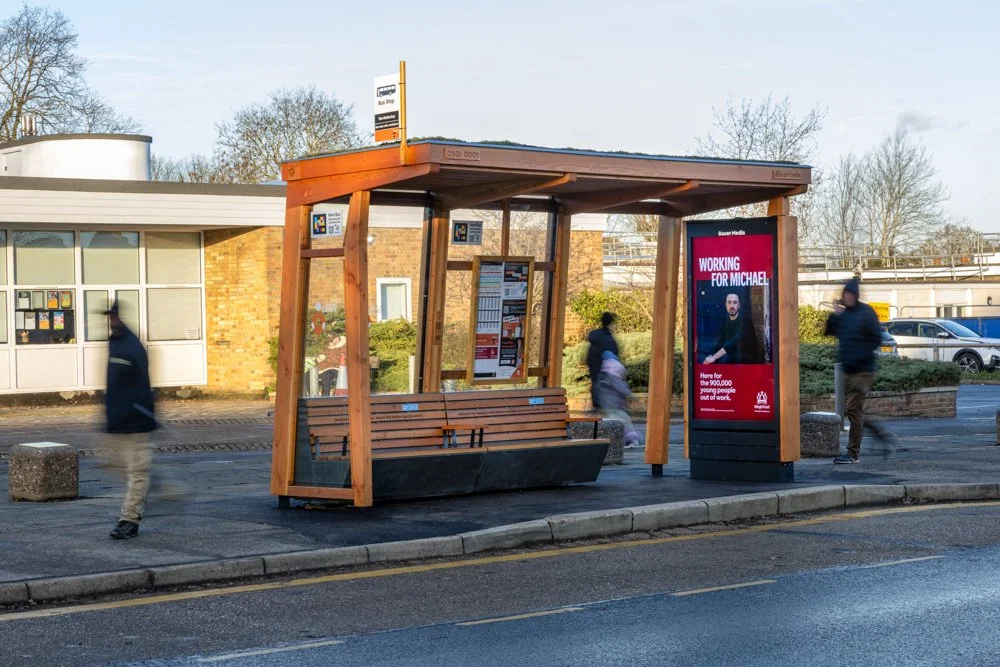
Picture a city street. What defines its look and character? It’s easy to see how its buildings shape the street, but what of the smaller features? Street furniture and public infrastructure punctuate almost every street. Further still, they influence our perception of place more than we realise.
In some cases, street furniture can even become more iconic than the street. Designed by architect Sir Giles Gilbert Scott in 1921, the red telephone box is an enduring icon of British design. A decade earlier in Paris, Hector Guimard designed the first Paris Metro entrances. Their striking Art Nouveau style is equally emblematic. Less prestigious in design but no less influential, where would the Beatles' legendary album cover for Abbey Road be without the humble painted lines of the zebra crossing? Now surely the most photographed road markings in the UK.
Bus shelters have long been objects of careful design consideration. They can, however, still often fall from our conscious perception of a street. At worst (through neglect or poor design), they can negatively impact our experience of a street.
But Bauer Media Outdoor, a leading provider of high-quality bus shelters across the UK and Europe has embarked on a bold new journey to ensure its UK bus shelters enrich everyday lives in an exciting and sustainable new way.
In 2024, Bauer Media Outdoor (through guidance from Innovate UK) formed a consortium of partners, including BE-ST, Ecosystems Technologies, Highland Heritage Woodworks, Vertical Meadow and Paramount Structures. Together, the partners set out to answer a simple question: What if bus shelters could be radically more beautiful and sustainable?
The answer they came up with was a new range of bus shelter designs that place homegrown, Douglas Fir timber, supplied by Highland Heritage Woodworks, at their heart.
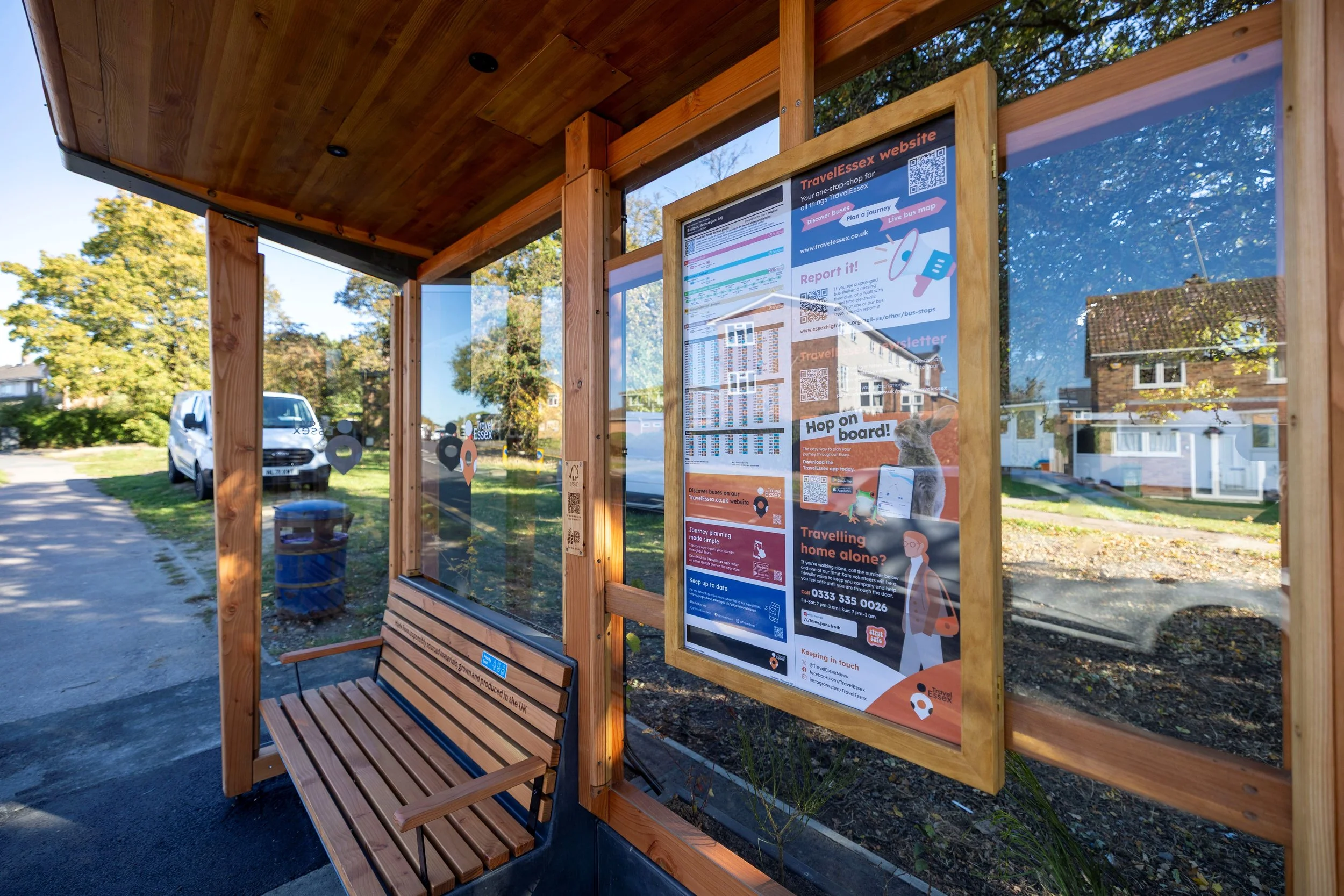
BE-ST has been supporting this project through technical consultancy services, including facilitation, design for manufacture and assembly support, and product testing.
The new shelters offer a robust set of environmental credentials — 70% lower CO2e compared to Bauer Media Outdoor’s legacy steel-framed shelters. Low-embodied-carbon materials, including homegrown mass timber (CLT & GLT), cork, sedum green roofs, solar PV, recycled plastics, and lower-embodied-carbon specification concrete and glass, all form part of the specification.
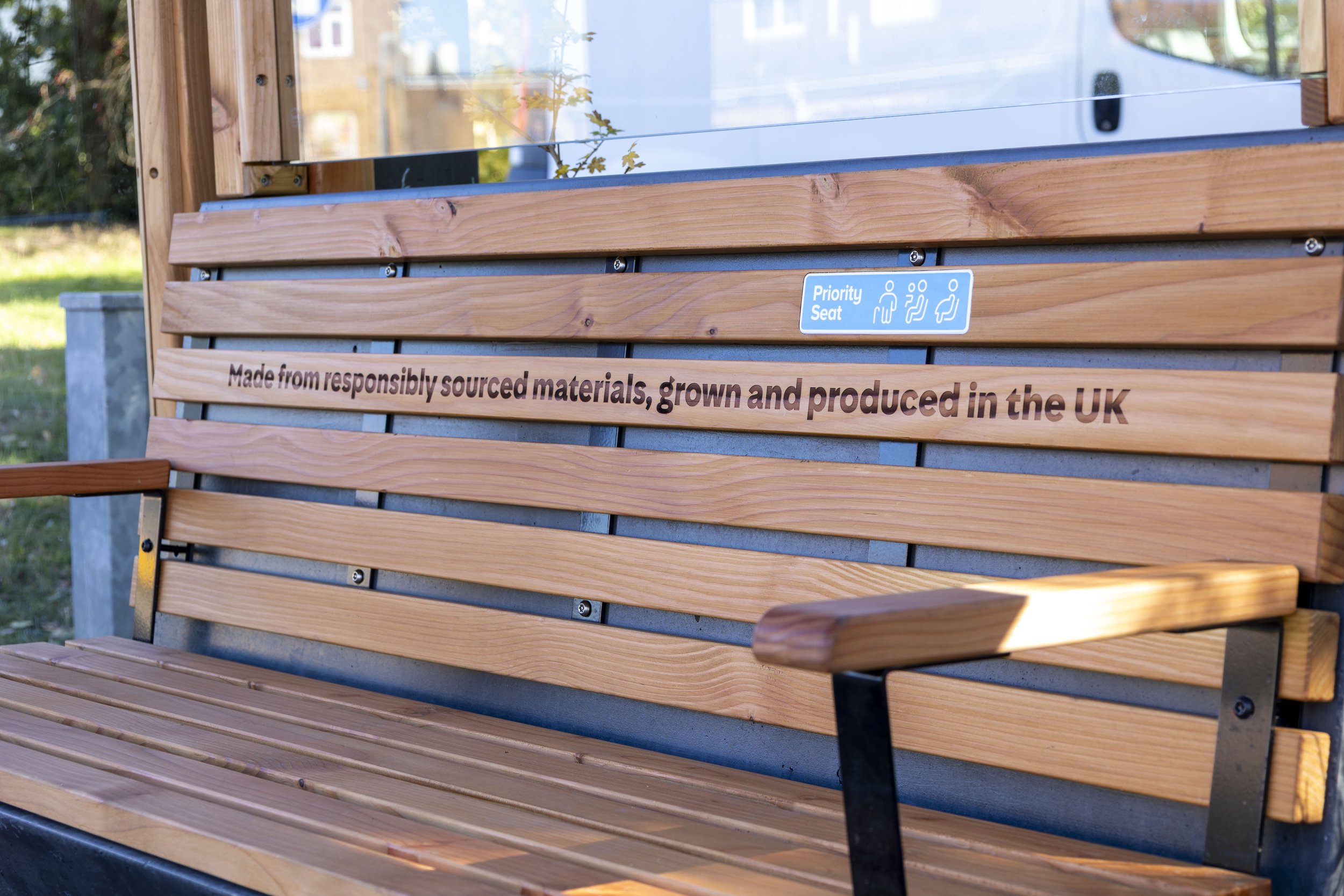
These materials wrap together around a set of accessibility-led designs, informed by comprehensive surveys conducted by the media owner. Features include well-considered lighting, signage, priority seating, and provision for wheelchairs.
The first iteration of these shelters can be found in Basildon, Essex. The BE-ST team was present during these first builds on Whitmore Way. Insights gathered from team members across Bauer Media Outdoor were fed back into the optimisation and refinement of the designs. The site operatives expressed joy and satisfaction from the beginning of working with timber. They noted the lightweight, easy workability of the material, allowing for the slightest final alignment to suit real-world site tolerances and conditions as key areas where timber outperforms steel and concrete componentry.
The use of homegrown timber in these shelters also represents a noteworthy development. The UK is the second largest global net importer of forestry products. 80% of the timber used in construction is currently imported. These shelters represent a win for the homegrown materials supply chain. The UK Government’s Timber in Construction Roadmap 2025 recognises increasing use of homegrown timber as a priority. In England and Wales, the share of new-build timber frames is approximately 10% (compared with over 90% in Scotland). This represents a huge opportunity for growing the timber market.
Neil Chapman, Product Design Director, UK & Europe at Bauer Media Outdoor, said:
“By using certified timber grown and sourced in Britain, we're reducing embodied carbon, strengthening local supply chains and demonstrating how transport infrastructure can support both environmental and economic sustainability. It's a practical example of how good design, responsible material choices and operational performance can work together.”
“If we're serious about creating more sustainable transport networks and better public spaces, every asset matters. At scale, even something as familiar as a bus shelter can have a meaningful impact on carbon reduction, placemaking and passenger experience.”
Action beyond the construction materials of our buildings is needed. There are 13,000 bus shelters in London alone. At a national level, what impact could replacing more bus shelters with timber designs have on carbon emission reduction? How much could this support homegrown supply chains? Structures of this size are also perfect for C16 grade timber - the grade of most of the homegrown timber.
The use of mass timber in street furniture is a genuine innovation and affords these shelters a unique aesthetic. For manufacturing partner Ecosystems Technologies, this project was not the first deployment of mass timber, leading to a compelling public infrastructure product. In collaboration with Ross Shire Engineering (RSE), Ecosystems developed a range of chemical dosing kiosks. Typically plastic in construction, these homegrown timber kiosks boast an impressive 85% reduction in embodied carbon. All while providing an elegant timber-clad aesthetic.
Bauer Media Outdoor’s bus shelters and RSE dosing kiosks represent a positive step towards a more considered and sustainable built environment. The central role homegrown timber plays in both these stories also demonstrates the potential of the supply chain.
The question to consider now is what other built assets in public life would benefit from a transformation? What objects or structures on the periphery of our awareness have the potential to become the next red telephone boxes?
When taken to their limits, these questions are answered by something like the Tokyo Toilet Project. 17 of the most publicly disliked toilets were selected in Tokyo's Shibuya district. These toilets were then renovated by 16 world-famous architects, including Tadao Ando and Shigeru Ban - the result - public infrastructure assets that are beautiful, safe and inclusive.
The project was so successful that the toilets have now become tourist attractions in their own right - they also feature heavily in the Wim Wenders 2022 feel-good film ‘Perfect Days’. A modern mirror of the same design-led model that brought us the phone boxes and metro stations in the early 1900s.